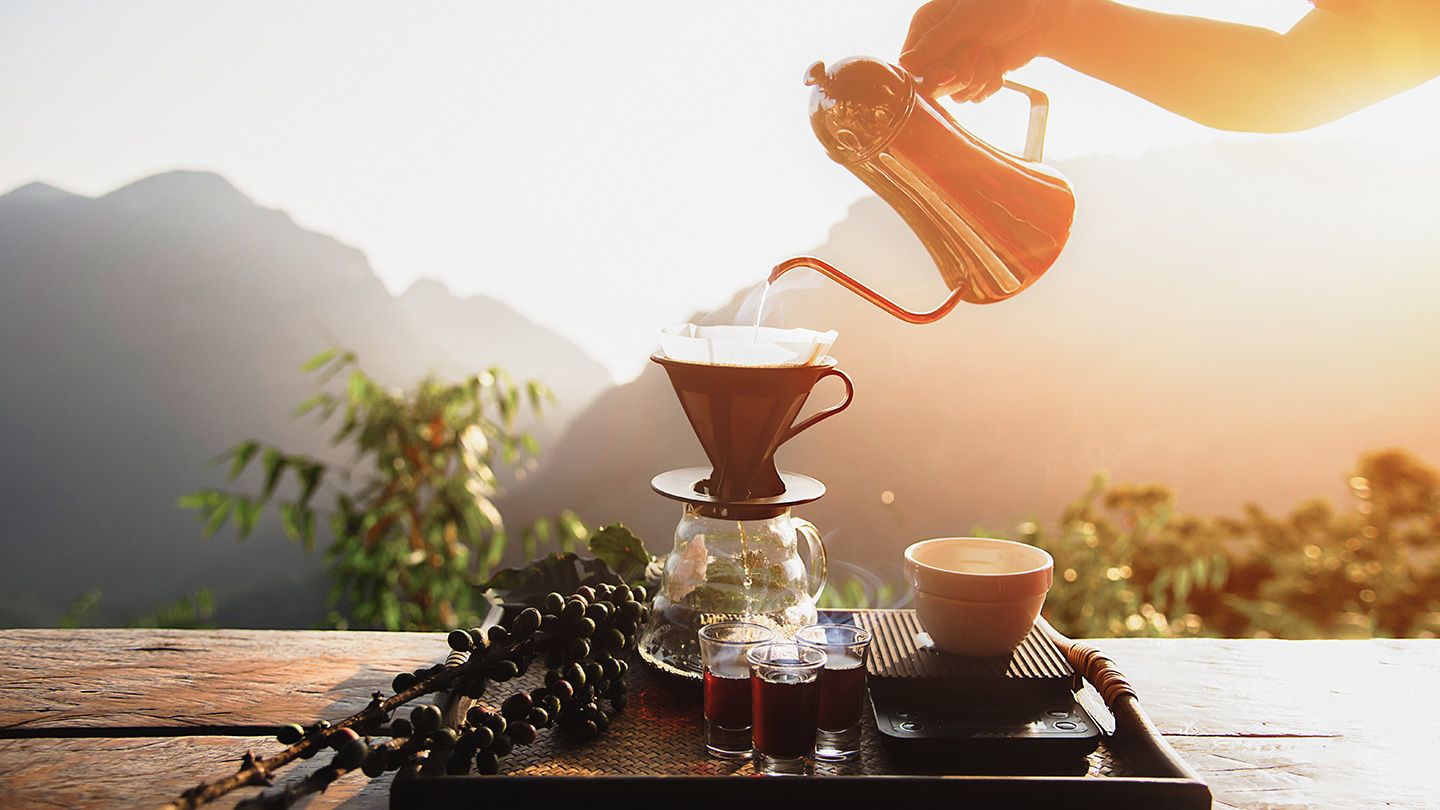
This FAQ section answers common questions about French Press, Pour Over, and Espresso brewing techniques. Whether you want a stronger flavor, a cleaner cup, or better control over your brew, these answers will help you understand how each method works and how to choose the best one for your personal coffee preferences.
 What makes the French Press different from other brewing methods?
The French Press uses full immersion brewing, allowing more natural oils into the cup and producing a rich, full-bodied flavor.
Why does French Press coffee taste stronger?The grounds steep for several minutes and aren't filtered through paper, giving a bolder, stronger flavor.
What type of grind should I use for French Press?A coarse grind prevents fine particles from slipping through the mesh filter and avoids bitterness.
Why is pour over considered a “cleaner” brewing method?Paper filters trap oils and tiny particles, creating a smooth, balanced cup with clean clarity.
Is pour over brewing difficult for beginners?Not at all—pour over requires some control over pouring, but beginners can get great results quickly.
What makes espresso stronger than regular coffee?Espresso is brewed under pressure, creating a concentrated shot with deep flavor and thick texture.
Can I make espresso without an espresso machine?Moka pots and Aeropress can make espresso-style coffee, but only real espresso machines create crema.
Which method highlights subtle flavors the best?Pour over is best for highlighting delicate notes because the paper filter removes heavy oils.
Which brewing method produces a bold, rich cup?The French Press produces the fullest-bodied coffee due to immersion and metal filtering.
Does the coffee cost calculator work with any brewing method?Yes! The calculator works for French Press, Pour Over, Espresso, or any method by estimating cost per cup.